About HHD HHD: Research & Practice HHD Global Work HHD News HHD: Centers & Projects HHD: Products
Centers & Projects: Centers Centers & Projects: Projects
Education Development Center, Inc.
Site MapContact


HHD Stories


HHD Global Programs

HHD Global Programs collaborates with country partners to facilitate the delivery of the most effective health promotion strategies to health workers, teachers, and political leaders. The knowledge exists to tackle many of the world’s greatest threats to health, and advances in technology make that knowledge more accessible worldwide. Although the resources to address health problems may vary from culture to culture, evidence indicates that preventive measures do work in reducing violence, drug, alcohol, and tobacco use, and HIV across the globe.

The Challenges

Clean water, shelter, food, basic health services, and education are luxuries for the estimated billion-plus of the world’s poor. HIV transmissions are escalating to alarming levels in many countries, and although new treatments are often successful in slowing the progression from HIV to AIDS and from AIDS to death, they are unaffordable and unavailable in many of the countries bearing the greatest burden of disease. Natural disasters, civil wars, and illicit drug trading further compromise the efforts of developing nations to fight their most pressing health problems. Despite these challenges, certain strategies can build the capacity of organizations to meet people’s basic health needs and promote healthier societies worldwide.

Mission

HHD Global Programs works with partners around the world to promote healthy human development and reduce risk behaviors and disease.

Strategies

  • Developing relationships with ministries of health, education, justice, culture, and youth development, as well as nongovernmental organizations
  • Providing technical assistance in policy and program development to governments, school systems, and educational organizations in the areas of HIV/AIDS; alcohol, tobacco and other drugs; and other issues affecting school health
  • Conducting research and evaluation to inform decisions
  • Training staff in state-of-the-art methods to promote school health
  • Facilitating country-driven capacity-building plans
  • Developing manuals, curricula, training and facilitation sessions, web sites, and learning networks to synthesize and disseminate best practices
  • In 1998, HHD was designated as the WHO Collaborating Center to Promote Health Through Schools and Communities. The Center’s goal is to deliver services that strengthen the capacity of schools and communities worldwide to promote the healthy development of students, school personnel, families, and surrounding communities.

Selected Projects

  • Rapid Assessment and Action Planning Process (RAAPP)
    In partnership with WHO, we developed an approach and package of tools--research instruments, training strategies, data analysis, and action planning techniques-- to assess and strengthen a country's capacity to deliver school health programs. Since 1999, RAAPP has been used in Indonesia, Nigeria and, most recently, in India. In these countries, RAAPP has brought together the Ministry of Health and Ministry of Education and other partners to jointly assess and plan their capacities to strengthen school health efforts.
  • Health and Family Life Education (HFLE) Regional Curriculum Framework
    In collaboration with CARICOM (Caribbean Community and Common Market), UNICEF, UNESCO, the University of The West Indies, and other partners, we have developed a regional curriculum framework on Health and Family Life Education. This framework provides sample lessons on sexuality and sexual health, self and interpersonal relationships, appropriate eating and fitness, and managing the environment for English-speaking Caribbean countries.
  • EI/WHO/EDC Teachers' Training Project
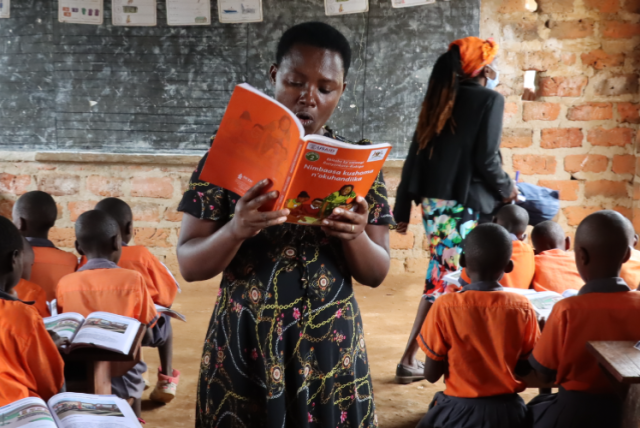
    In partnership with Education International (EI) and WHO, we trained 130,000 teachers in 22,000 schools in 15 southern African countries and in Guyana and Haiti to use a skills-based HIVand AIDS prevention training and resource manual. The manual that we developed along with EI, WHO,and local teachers improves teachers’ communication and advocacy skills, and builds students skills around HIV and AIDS prevention, through active learning such as role-playing, brainstorming, and small-group discussions. A recent evaluation of the program concluded that the program is empowering teachers and students to confront HIV. Along with EI and WHO, we also developed a streamlined version-- Teachers' Exercise Book for HIV Prevention-- of all the participatory activities included in the training and resource manual. The book contains some additional activities and provides an opportunity to the teachers to expand the program further.
  • Health-Promoting Schools in China
    Together with WHO, we are providing technical assistance to the provincial Health Education Institute, departments of health and education, and project schools in Zhejiang Province, China, to establish Health-Promoting Schools with an emphasis on priority health issues. Pilot projects in this province have been successful in improving knowledge, attitudes, and behavior in students, parents, and school staff. Based on these promising results, this project is now systematically being scaled up province wide. For more information, please see the feature story.


Selected Publications

Funders

World Health Organization Headquarters and Regional Offices, UNICEF, U.S. Centers for Disease Control and Prevention

Director

Cheryl Vince Whitman

Associate Directors

Scott Pulizzi
Carmen Aldinger