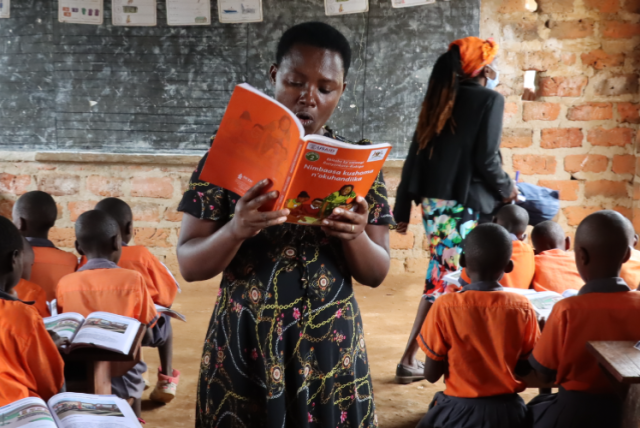

By 2010, every student in Botswana's primary and secondary schools will be using the HHD-developed school health curricula and will be taught by a trained teacher.
Educators in the Caribbean are developing new ways to respond to the HIV/AIDS crisis and reduce stigma by doing more to involve those who live with HIV and AIDS.
Educators are joining with health professionals to respond to the AIDS pandemic in the Caribbean—the leading cause of death among young people ages 15-29.
Positive Partnerships grew out of EDC’s work with the Caribbean Education Sector HIV and AIDS Coordinator Network (EduCan), which brings together HIV and AIDS coordinators from Caribbean education ministries to create a policy-level response to the region’s HIV/AIDS crisis. It is funded by UNESCO. For more information contact ahusbands@edc.org
EDC and UNESCO Kingston Cluster Office for the Caribbean
Funder:
UNESCO
To achieve more meaningful involvement of people living with or affected by HIV and AIDS, and reduce stigma and discrimination against them, this toolkit helps maximize the skills of persons workin
This curriculum uses skills-based health education to help students acquire the knowledge, attitudes, and skills that are necessary to make informed decisions and understand the consequences of tobacc
For more information or to obtain:
Download a copy of Model School Health Tobacco Control Intervention in English (PDF) or French (PDF)
This online course is designed to support local leaders throughout the Americas as they prepare for and respond to the global (H1N1) 2009 influenza health crisis.
HHD is examining the research and best practices on the mental health needs of expelled students, with the aim of developing strategies and services to address their needs.
Educators and government officials are increasingly aware of the relationship between mental health issues and student behavior.
This project is funded by the California Endowment. For more information about it, please contact: Nancy Kelly at nkelly@edc.org.
A growing body of research identifies strong links between children’s health and educational outcomes; it also notes the reciprocal benefits of access to quality education on individual and family hea
With mental health problems affecting 1 out of 5 children, HHD’s National Center for Mental Health Promotion and Youth Violence Prevention helps communities develop effective health programs and po
Childhood depression, violence, prescription drug abuse, and other signs of youth distress have schools grappling with mental health issues in new ways.
The National Center for Mental Health Promotion and Youth Violence Prevention is funded by the federal Substance Abuse and Mental Health Services Administration (SAMHSA). For more information contact Deborah Haber at dhaber@edc.org
The Voice of Children survey asks 1,500 students in each of three countries—Jordan, Lebanon, and Palestine—about the impact of school as a learning environment on their well-being.
The Universal Education Foundation, a partner with EDC, captured the views of young people in the Middle East about the ways they believe school affects their well-being.