Injuries

YWSRC - Reducing on-the-Job Injuries among Teens

Youth @ Work: Talking Safety, an occupational safety and health curriculum developed by HHD and the University of California at Berkeley, was used in school systems and job training programs

Issue Brief: Suicide and Bullying

Publication date: 
2011
Project Name: 
National Suicide Prevention Resource Center

This issue brief examines the relationship between suicide and bullying among children and adolescents, with special attention to lesbian, gay, bisexual, and transgender (LGBT) youth.

For more information or to obtain: 

Download a copy of Issue Brief: Suicide and Bullying from the Suicide Prevention Resource Center.

For more information, please contact info@sprc.org.

Bullying Prevention Resources

Recent media coverage of bullying incidents has renewed national interest in the serious and widespread problem of bullying.

Recent media coverage of bullying incidents has renewed national interest in the serious and widespread problem of bullying.

Preventing Bullying: The Role of Public Health Safety Professionals

Publication date: 
2011
Project Name: 
Children's Safety Network: National Injury and Violence Prevention Resource Center
Funder: 
U.S. Department of Health and Human Services, Health Resources and Services Administration, Maternal and Child Health Bureau

Bullying is far too often seen as an inevitable part of youth culture.

For more information or to obtain: 

Obtain a copy of Preventing Bullying: The Role of Public Health Safety Professionals from the Children's Safety Network.

Trauma care quality improvement

Project Name: 
WHO Collaborating Center to Promote Health Through Schools and Communities
Funder: 
World Health Organization

This course seeks to promote better understanding of quality improvement in trauma care and to provide training on straightforward and practical techniques, such as preventable death reviews.

For more information: 

This course can be accessed on the WHO website at www.who.int/violence_injury_prevention/capacitybuilding/courses/trauma_quality/en/index.html.

Healthy Action: An Activity Book for Teachers and Learners

Publication date: 
2011
Author(s): 
Education International (EI), Education Development Center, Inc. (EDC), and the World Health Organization (WHO)

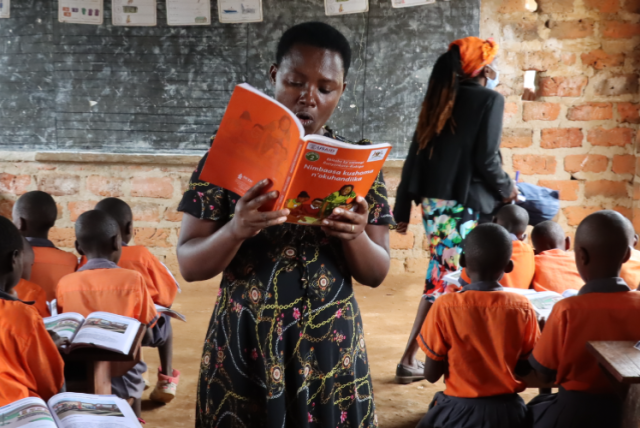
This toolkit is based on the premise that healthy students and teachers live better.

The activities herein are designed to help learners and teachers develop healthy

For more information or to obtain: 

Download a copy of the Healthy Action: An Activity Book for Teachers and Learners (PDF, 11.91 MB).

Intimate partner and sexual violence prevention course

Project Name: 
WHO Collaborating Center to Promote Health Through Schools and Communities
Funder: 
World Health Organization

This course presents an evidence-based public health and life-course approach to preventing intimate partner and sexual violence against women.

Trauma care system planning and management

Project Name: 
WHO Collaborating Center to Promote Health Through Schools and Communities
Funder: 
World Health Organization

This course provides an overview of injury as a public health problem, the different elements of a trauma care system, as well as strategies for improving trauma care services and systems.

For more information: 

This course can be accessed on the WHO website at www.who.int/violence_injury_prevention/capacitybuilding/courses/trauma_care/en/index.html.

Preventing Injuries

You are missing some Flash content that should appear here! Perhaps your browser cannot display it, or maybe it did not initialise correctly.

Injuries are preventable, says EDC's Sally Fogerty, Director of the Children's Safety Network, which provides states with technical

Duration: 
0:01:55

Child Abuse and Neglect: A Public Health Problem?

Child abuse and neglect is a hidden part of life. HHD is involved in a project to better understand and assist states with taking a more proactive approach to this issue.

In order for children to thrive and learn, they need to grow up in a safe, nurturing, and stable home. Unfortunately, that is not always what happens.

For more information contact sfogerty@edc.org.

Syndicate content